Ingrown Toenail Treatment and Surgery in Radlett
Ingrown toenails are often straightforward to deal with if you get them seen promptly. We treat ingrown toenails in Radlett, from simple non-surgical care to comfortable nail surgery under local anaesthetic when it is needed.
Do I need surgery?
An ingrown toenail happens when the edge of your nail grows into the soft skin of your toe. It can feel like a splinter, and it can be quite painful, often causing redness, swelling or even infection. Ingrown toenails usually affect the big toe, but can happen on any toe. Not every ingrown nail needs surgery, so here is how we decide.
Self-care
For mild cases, soaking your foot in warm, salty water and applying a clean bandage can help.
See a podiatrist
Even if your ingrown toenail is severe or infected, a podiatrist can provide safe and effective treatment: carefully trimming the edge with fine nail tools and clearing out the infection. Antibiotics are rarely required. Cutting the nail effectively and packing the sides can be very successful, and sometimes the nail can recover when treated early.
Surgery
For recurring ingrown toenails, and nails with granulating tissue growing over them (usually because the nail is deeply embedded or has been left too long), a minor surgical procedure carried out by a podiatrist may be recommended. When regular cutting and trimming fails, it provides a long-term solution.
Nail surgery is usually undertaken when the nail is extremely painful, inflamed and swollen, or the nail is very curved, wide or embedded. If the nails are excessively thickened and damaged, the entire nail can be removed to relieve the pressure from shoes.
How do I know I have one? The main symptom is pain, followed by redness and swelling around the nail. Sometimes there might be pus or drainage. Ingrown toenails can feel similar to corns or calluses, so if you are unsure, it is always best to see a podiatrist.
What causes ingrown toenails, and who gets them?
Common causes include cutting your toenails too short or at an angle, wearing tight shoes, socks or hosiery, sweaty feet, naturally curved or brittle toenails, picking or tearing at your toenails, certain medications (for example the acne medication isotretinoin) and foot injuries.
Active, sporty people are particularly prone, because they sweat more. Younger people are more likely to get them, as they pick their nails more, compared with older people who may not be able to reach their toes!
How can I prevent ingrown nails?
- Cut your nails correctly: straight across and slightly longer than the tip of your toe.
- Wear comfortable shoes and socks: choose breathable materials and avoid tight-fitting styles.
- Keep your feet clean and dry: this helps prevent infections.
Ingrown toenail surgery
The operation is called partial nail ablation (PNA): the ingrown portion of the nail is removed, and the part of the nail root that produces it is treated so that it does not grow back.
- Numbing the area. You will receive two local anaesthetic injections in the base of the toe, so you will not feel any pain during the procedure.
- Removing the problem. The podiatrist will carefully remove the ingrown portion of your nail.
- Preventing regrowth. A special solution of phenol is applied to stop that part of the nail from growing back.
- After the procedure. A bandage will be applied, and you will be able to walk normally (but avoid driving while your toe is numb). Bring comfortable, loose-fitting shoes to wear.
The appointment is an hour, and the surgery itself takes about 45 minutes in most cases.
Recovery and aftercare
- The first day. Take it easy on your feet.
- The first few days. There will be a bandage on the toe for 2–3 days. After this a smaller dressing is needed and you can carry on as normal. You can go to work or school the next day.
- The first two weeks. Avoid contact and kicking sports for about two weeks, although it depends how the toe feels.
- About three weeks. Healing typically takes about three weeks. Some redness and discharge are normal during healing.
Is it painful afterwards?
Most people are pleasantly surprised at how little discomfort they feel once the ingrown nail is gone. We recommend taking over-the-counter pain relievers like paracetamol while your toe is still numb, and for a day or two after if needed.
Dressing changes and follow-up
We will see you for one to three brief follow-up appointments to check your progress, depending on how you are healing. You will need to change the dressing daily. We will show you how, and recommend soaking your toe in warm salt water.
Results
Published studies report that only about 1–5% of ingrown nails grow back after this type of surgery (source). Here are two of our patients.
Patient C: a severe, neglected toenail


This nail had been deteriorating for years before this nervous and embarrassed patient finally came to see us for surgery. The nail healed up without problems after the surgery and is now normal and problem free.
Patient H: a child with an ingrown nail

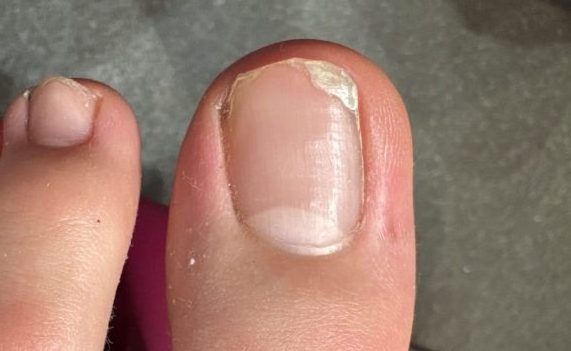
The ingrowing was closer to the base of the toe. After a few failed appointments to see if we could get it to grow out, we performed the surgery. The photo on the right shows a pain-free, problem-free nail a few years later, so you can see the long-term outcome.
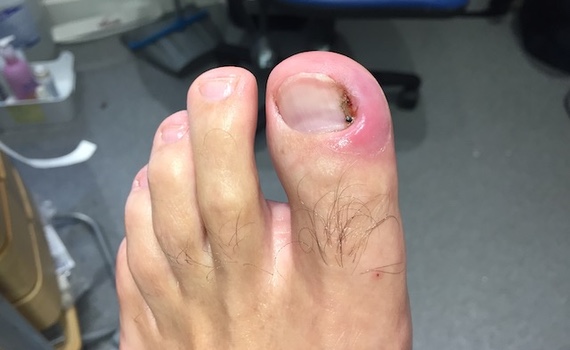
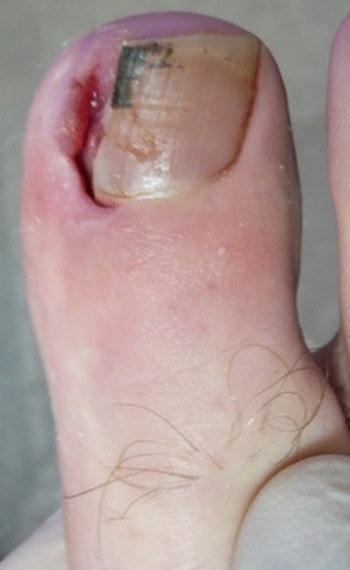
More photos: what ingrown nails look like
Paronychia
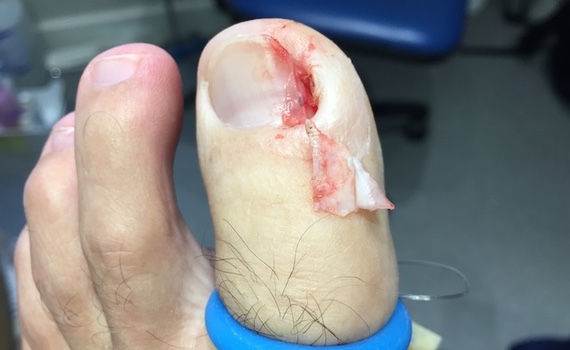
Nail sections that can cause ingrown toenails
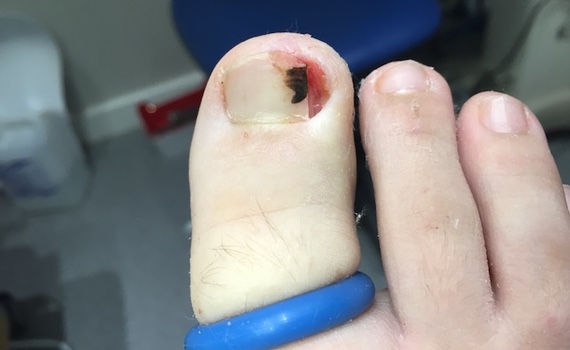
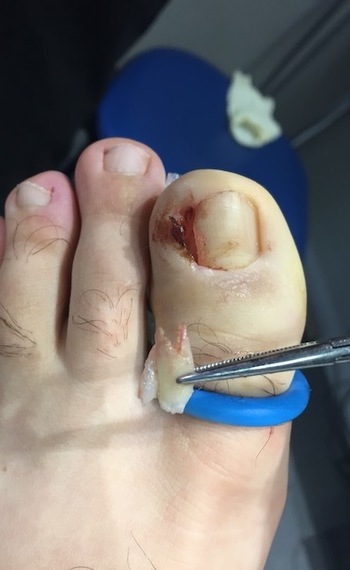
Hypergranulation
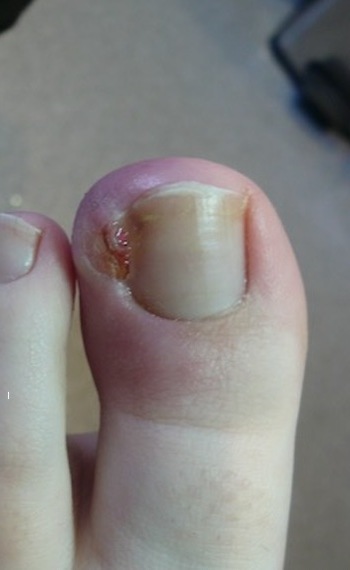

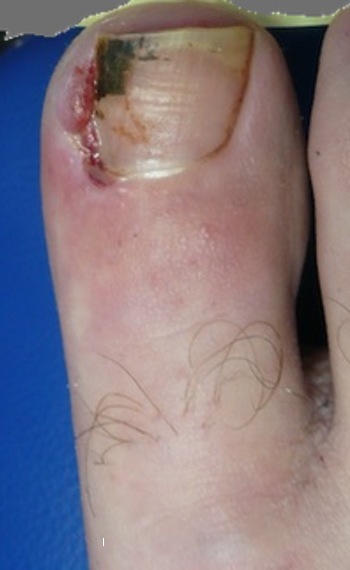
Getting started
Usually you will have a consultation before surgery (you may already have had one). If you have a referral letter or think you might need surgery, you can book a consultation, or a telehealth (video) consultation if you wish to come straight in. We encourage you to ask questions, and you can email us a picture of your toe for a quick assessment.
We will ask about your overall health and any medications you take. If you take steroids, blood thinners or have a weakened immune system, please make sure we know at the outset. We only treat higher-risk patients in liaison with their GP, for example patients with cancer, kidney disease, uncontrolled bleeding or diabetes.
Costs and booking
| New patient consultation (30 minutes): discuss your options and provide initial non-surgical treatment | £80 |
| Telehealth video consultation (15 minutes) | £55 |
| Surgery: one toenail (one-hour appointment) | £400 |
| Surgery: both big toenails (one-hour appointment) | £500 |
The consultation is essential if you have a mild ingrown toenail or a new problem, because not everyone needs surgery. The surgery fee covers your operation and all follow-up care.
Book a consultation (£80)Book surgery: one toenail (£400)Book surgery: both big toenails (£500)Book a telehealth consultation
If you have a referral, we are normally able to see you without an initial appointment. A new patient form needs to be completed in advance, the deposit or minimum charge (£90) paid, and the referral sent to us. If you were told you need surgery, you can email us your referral or pictures, and we can take a brief look and advise whether we are happy for you to come in without an initial consultation. You will need to complete a health form.
Insurance. If you have insurance, the procedure code is typically S7010. You are ultimately responsible for the fees and need to have the correct authorisation code. The deposit would still need to be paid when booking the appointment.
Frequently asked questions
How long does the surgery take?
Will it hurt?
Can I go to work or school the next day?
When can I drive?
When can I play sport?
How long does it take to heal?
Will the nail grow back?
Do I need a consultation first?
Can children have ingrown toenail surgery?
What if I have diabetes or another health condition?
Is it covered by insurance?
Can I email a photo first?
Watch: ingrown toenail surgery
Michael Abrahams performs an operation to remove an ingrown toenail for Channel 4’s Embarrassing Bodies programme, and gives you an idea of what can be done to solve these problems. Skip forward a minute if you want to get straight to the procedural information.
Ready to book?
Not sure, or have questions? Contact our practice manager on 01923 856 235. If it is urgent, we will do our best to fit you in quickly.
Book a consultation (£80)Book a telehealth consultationCall 01923 856 235